Barcode
The barcode function creates industry-standard 1D and 2D barcodes that are optimized for printing and on-screen scanning..
Barcode symbologies
Create a wide range of barcode symbologies.
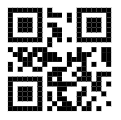
The Quick Response code (QR code) is a two-dimensional barcode. It can efficiently store more information in a smaller space than 1D barcodes. Each barcode can store values up to 7089 characters. It is mostly used for URLs, business cards, and contact information.
HTTP Request
POST /v1/function/{workspace_id}/call/qrcode.create
https://portal.datafeed360.com/v1/function/{workspace_id}/call/qrcode.create \
     -H 'Authorization: Bearer {token}'

{
  "values": [
    { "text":"https://www.tigalsoft.com/", "image_format":"gif", "target_file":"/Barcodes/qr1.gif", "overwrite":true },
    { "text":"https://www.datafeed360.com/", "image_format":"gif", "target_file":"/Barcodes/qr2.gif", "overwrite":true }
  ]
}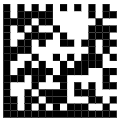
A Data Matrix is a two-dimensional barcode. The information is encoded with text or numeric values. Each barcode can store values up to 2335 alphanumeric characters. It is mostly used by couriers and the food industry.
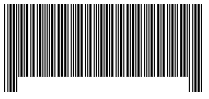
Code 39 is a common barcode type used for various labels such as name badges, inventory, and industrial applications. The symbology of the Code 39 character set consists of barcode symbols representing numbers 0-9, upper case letters A-Z, and the space character.
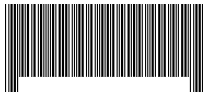
Code 39 Extended, as expected, is an extended version of Code 39. In this version, lower characters and special characters are supported.
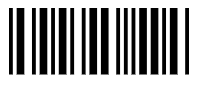
Code 11 is also known as USD-8, high numeric symbology. The character set includes the digits 0-9, a dash symbol ( - ), and start and stop characters. It is commonly used in telecommunications.
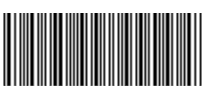
Codabar is also known as USD-4 and Code 2 of 7. It can encode digits 0-9, six symbols, and start and stop characters. It is even possible to print Codabar codes using typewriter-like impact printers, which allows the creation of many codes with consecutive numbers without having to use a computer.
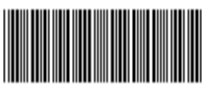
The Code 32 is also known as Italian Pharmacode. It has the following structure: The ‘A’ character that is not really encoded, 8 digits for Pharmacode, and 1 digit for Checksum module 10 that is automatically calculated by Barcode Professional.
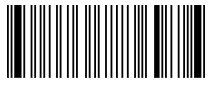
Code 93 was designed to complement and improve Code 39. It is used to represent the full ASCII character set by using combinations of two characters. Code 93 can encode uppercase letters, numeric digits, and a handful of special characters.
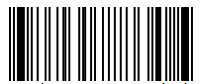
This extends Code 93 to encode the full 128-character ASCII. The characters represented by Code 93 are represented in Code 93 Extended as single barcode characters, but all other characters are represented by a control character plus another character.
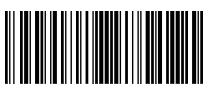
Code 128 is a very high-density barcode that supports alphanumeric characters. This barcode is used as the basis for many other barcodes, like UCC/EAN, HIBC (health industry barcode), and the blood bank industry.
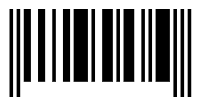
The Universal Product Code (UPC -A) is a numeric symbology used in retail applications. UPC-A symbols consist of 11 data digits and one check digit. The first digit is a number system digit that normally represents the type of product being identified.